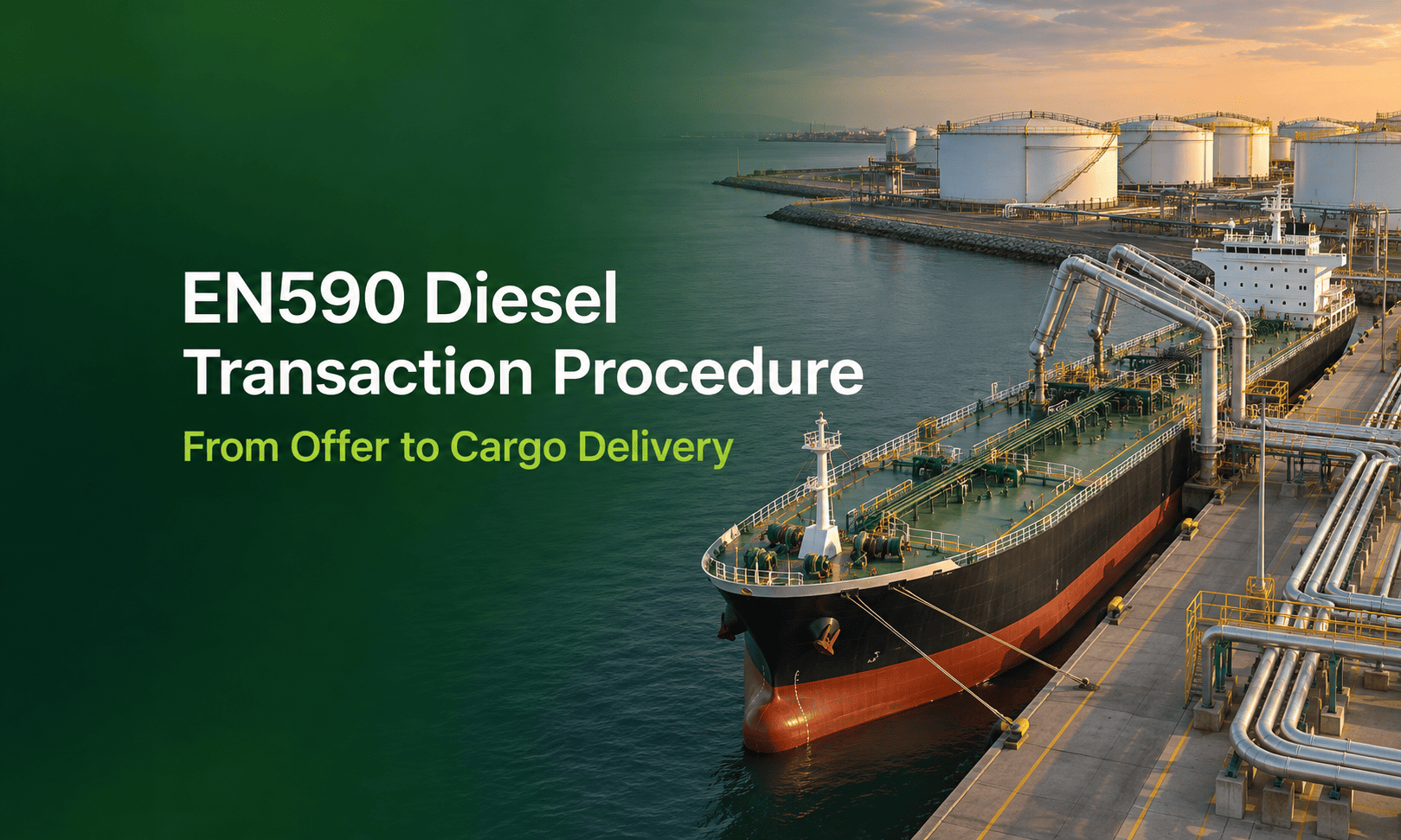
EN590 Diesel Transaction Procedure: From Seller Offer to Cargo Delivery
Received an EN590 diesel offer with a procedure attached? Before you commit to a cargo, ask the seller to confirm who acts at each stage, what evidence is provided, and when each commitment becomes due. Those details tell you whether the offer fits your shipping schedule, receiving arrangements and payment requirements.
This EN590 transaction procedure guide is for international bulk buyers evaluating FOB or CIF offers for spot cargoes, trial liftings or monthly supply.
Already have a seller’s procedure? Send GPA your cargo volume, proposed port, delivery window and the step you need to clarify. Discuss Your EN590 Transaction With GPA
EN590 transaction procedure at a glance
| Stage |
What the buyer should confirm before moving forward |
| 1. Submit the purchase requirement |
Product specification, volume, named port, FOB or CIF basis, and required loading or delivery dates. |
| 2. Review the seller’s offer and proposed procedure |
Contracting seller, commercial terms, cargo status and the order of inspection, document release and payment. |
| 3. Align the procedure with the SPA |
Both parties agree on the sequence, deadlines and conditions that trigger their obligations. |
| 4. Confirm shipment readiness |
Vessel and terminal arrangements, nomination deadlines, cargo readiness and the operating window. |
| 5. Inspect and document the cargo |
Inspector appointment, sampling point, measurement method, required reports and shipping documents. |
| 6. Complete payment and delivery |
The agreed payment trigger is met, the invoiced quantity is reconciled, and the delivery records are retained. |
Use this as a review sequence. The order of inspection, loading, document release and payment depends on the terms agreed for the cargo.
1. Submit a requirement the seller can quote
Give the seller enough information to assess the shipment. Include the required grade, quantity in metric tonnes, named port, delivery basis and target window.
For FOB purchases, name your preferred loading port and mention any vessel constraints. On a CIF deal, provide the destination port and any known restrictions at the receiving terminal.
If you’re buying monthly, list the trial quantity separately from the expected monthly volume. Ask which dates the seller can commit to for the first cargo and when they can confirm later liftings. Should the seller request an ICPO, use the commercial details you’ve already agreed. See GPA’s guide to preparing an EN590 ICPO.
2. Ask the seller to put the diesel purchase procedure in writing
Compare the offer against your requirement and ask for the proposed sequence. Identify the legal entity selling the cargo, who can sign for it, and which party will issue the invoice. If the offer comes through a representative, establish how the contracting seller will confirm its role and the proposed lifting.
Ask for a clear answer to these questions:
- When will the seller confirm the loading terminal and cargo window?
- At what point must the buyer nominate a vessel, reserve tank storage or arrange a payment instrument?
- Which documents will be available at each stage, and who issues them?
- What must happen before inspection, release, loading or payment can proceed?
If a seller asks for a commitment while an earlier step is still open, identify who carries the cost if that step falls through. For example, if freight must be booked before terminal acceptance, agree how cancellation costs will be handled if the vessel is rejected.
3. Match the transaction procedure to the sale and purchase agreement
Read the procedure alongside the sale and purchase agreement (SPA). If the procedure calls for payment after a shore-tank inspection and the SPA ties payment to completed loading, resolve that difference before signing. Do the same for inspection dates, terminal fees, document release and nomination deadlines.
Record the agreed sequence in the signed contract or its schedule. State which document takes precedence if terms conflict. For the clauses themselves, see EN590 Diesel Sale and Purchase Agreement: 10 Checks Before You Sign.
4. Confirm the FOB or CIF shipment arrangements
FOB EN590 procedure
Under FOB Incoterms® 2020, the seller delivers the cargo on board the vessel nominated by the buyer at the named shipment port. Risk transfers when the cargo is on board. In practice, the buyer’s chartering team needs the terminal’s vessel requirements, nomination deadline and loading window. Confirm who obtains terminal acceptance and when the seller will confirm cargo readiness. library.iccwbo.org
CIF EN590 procedure
Under CIF Incoterms® 2020, the seller arranges freight and insurance to the named destination port. Risk generally passes when the cargo is loaded on board at the shipment port. The buyer should confirm the shipment window, insurance evidence, expected arrival and receiving terminal requirements. Agree separately when ownership passes and what triggers payment. library.iccwbo.org
If the deal requires leased capacity, confirm the fuel grade, volume, dates and intake method with the terminal operator before committing to storage. GPA can nominate suitable tank storage through verified providers, subject to the operator confirming capacity, product acceptance and dates. Request Tank Storage Nomination
5. Agree how inspection and documents fit into the EN590 cargo procedure
Confirm who appoints the inspector, where samples are taken, which tests apply and how the final quantity is measured. Identify which reports are required at each stage and how the parties will handle a disputed result or a cargo outside specification.
Build a document schedule with four columns: document, issuer, deadline and purpose. Depending on the deal, it may include the commercial invoice, bill of lading, quality and quantity certificates, certificate of origin and insurance evidence. Match the relevant cargo references, dates, quantities and named parties against the agreed lifting.
A practical question to send the seller is: “Which documents will we receive before loading, which will be issued after loading, and which ones trigger payment?”
6. Confirm the payment trigger and close out the lifting
If the offer says “payment after inspection,” identify the inspection and the evidence that starts the payment clock. A pre-loading quality report and a final load-port quantity certificate are different milestones. State which one applies, what other documents are required and when payment is due.
If payment is by documentary credit, confirm with the bank that the credit’s document requirements match what the seller, carrier and inspector can provide within the agreed deadlines. Banks examine the documents presented under the credit. Physical cargo inspection and acceptance remain separate parts of the transaction. academy.iccwbo.org
For monthly supply, reconcile the first lifting and record any changes needed before the next nomination. Confirm whether later volumes are firm or require fresh confirmation each month.
Discuss an EN590 procedure or request bulk diesel supply
If you have a seller’s offer, send GPA your company name, cargo quantity, named port, shipment window and the step you need to clarify. A short summary of the proposed procedure is enough for the initial enquiry.
If you need supply, send your required grade, volume, preferred FOB or CIF terms and loading or delivery dates. For a monthly programme, include the trial quantity, monthly volume and intended contract duration.
Discuss an Existing EN590 Offer · Request a Bulk EN590 Quote









No Comments