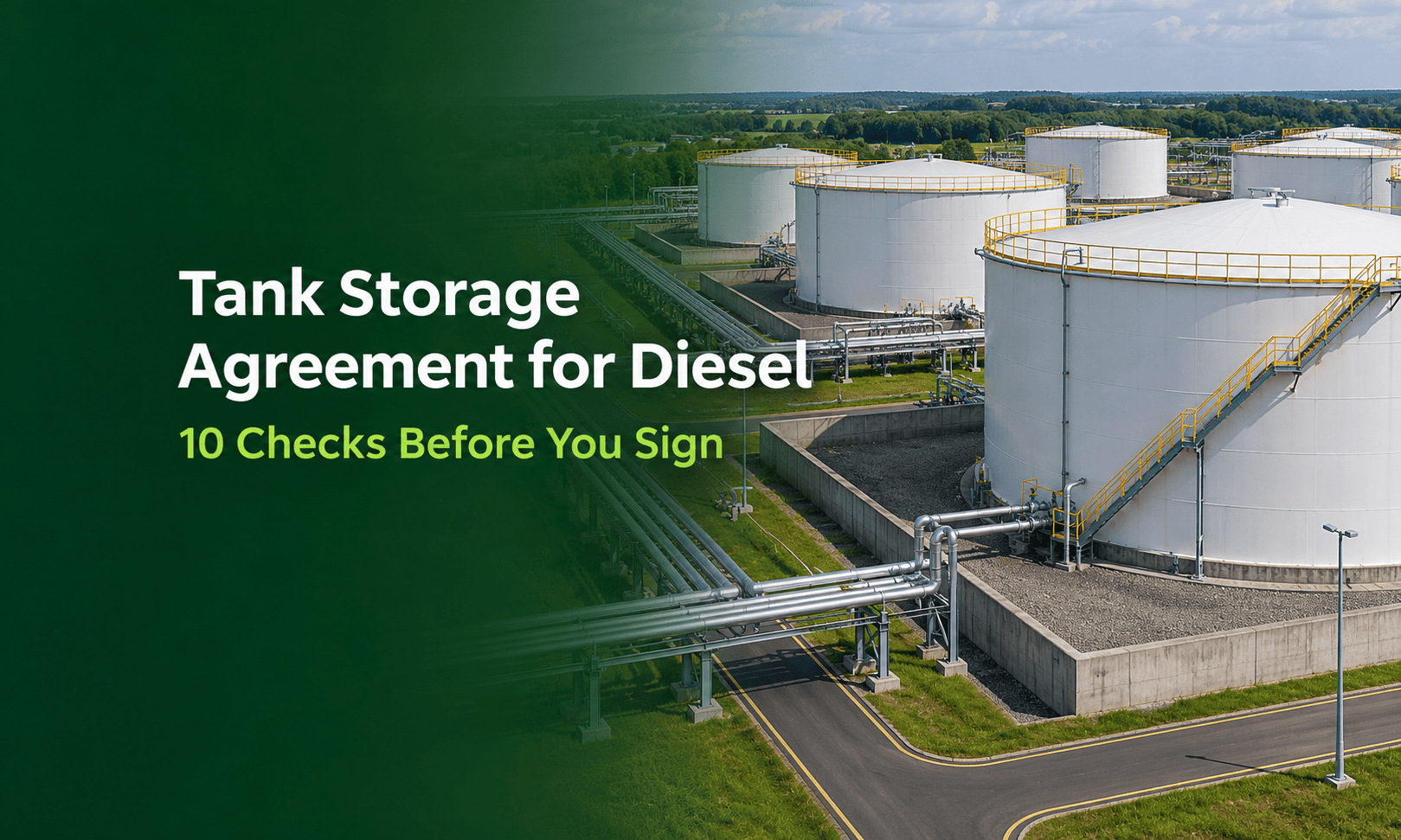
Tank Storage Agreement for Diesel: 10 Checks Before You Sign
A terminal quotes enough capacity for your EN590 diesel cargo. Before you sign the tank storage agreement, confirm whether you can receive the full cargo during your arrival window and move it out on schedule. Then check what you’ll pay if the vessel arrives late, you move less product than expected, or the diesel stays beyond the agreed period.
These checks are for international bulk diesel buyers comparing terminal offers or reviewing a draft storage contract. Use them alongside your cargo purchase agreement and shipping schedule.
Need storage for a planned cargo? Send GPA your preferred port, fuel grade, cargo volume and arrival window. GPA can nominate suitable tank storage through verified providers, subject to confirmation by the terminal operator. Request Tank Storage
What is a tank storage agreement?
A tank storage agreement sets out the capacity a terminal makes available, which products it accepts and how the customer can bring fuel in, hold it and move it out. The commercial details may sit across a signed agreement, rate schedule, operating procedures and general conditions. Ask for the complete set before comparing offers. Published terminal conditions can include provisions on charges, liability and dispute resolution. General Conditions for Tank Storage
Tank storage agreement checklist — 10 terms to review
Confirm the terminal, capacity and diesel grade
| Check |
What to confirm before signing |
| 1. Contracting party and terminal |
Identify the legal entity offering the capacity, the physical terminal and the invoicing entity. If a third party offers the space, ask the terminal operator to confirm the arrangement through an independently sourced contact. |
| 2. Usable capacity |
Confirm the working capacity available for your dates and whether it can receive your full shipment. If the cargo is quoted in metric tonnes and the terminal quotes in cubic metres, agree the density and reference conditions used for the conversion. |
| 3. Product acceptance |
Get confirmation that the terminal accepts your diesel grade and any additives. Ask whether the tank is dedicated or shared, what product it previously held and whether cleaning or segregation is required. |
Review scheduling, handling fees and throughput
| Check |
What to confirm before signing |
| 4. Arrival window and nominations |
Confirm the storage start date, first intake window, nomination deadline and process for changing dates. Ask when the slot becomes firm and what happens if the vessel misses it. |
| 5. Intake and release methods |
Check which modes are available for your booking, such as vessel, barge, pipeline or truck. Agree transfer rates, operating hours, scheduling lead times and who can authorise release. |
| 6. Storage and handling charges |
Separate capacity rent from intake, release, transfer, sampling, cleaning and overtime charges. Ask for the total cost for your planned movements and the rates for any additional movements. |
| 7. Minimum throughput |
If the agreement requires a minimum volume to move through the terminal, confirm how it’s measured, the period it applies to and what you owe if you fall short. |
Check stock measurement, liability and exit terms
| Check |
What to confirm before signing |
| 8. Measurement and stock reconciliation |
Agree which measurement controls at intake and release, who records it and how discrepancies are handled. Check when you receive stock statements and how long you have to dispute them. |
| 9. Loss, contamination and insurance |
Review who bears responsibility for product loss, contamination or damage, how claims are documented and what limits apply. Confirm the coverage each party is expected to arrange. |
| 10. Extension, cancellation and exit |
Check the notice period, extension rates, cancellation charges and deadline for removing the fuel. Ask what happens to residual stock and who pays for any final cleaning. |
Compare the full cost of each diesel storage offer
Ask each terminal to quote on the same cargo, dates and movements. A storage quote for 30 days can look competitive until you add vessel intake, several releases and a minimum throughput charge.
Suppose you expect one vessel intake and three barge releases over 30 days. Give each terminal that operating plan and request a price for two scenarios.
- Planned schedule. One intake, three releases and full removal within the agreed period.
- Delayed schedule. The vessel arrives five days late and the final release moves into an additional storage period.
Ask the operator to identify which charges apply in each scenario and when they start. That gives your team a cost comparison it can use when choosing a terminal and negotiating the cargo schedule.
Verify the storage offer before committing funds
Use contact details obtained independently of the quotation. Ask the terminal operator to confirm, through its own process, the terminal location, the party offering capacity and the status of your booking. If someone requests payment, verify the invoicing entity and payment instructions through an established channel. Vopak publishes a storage-spoofing warning alongside its terminal directory. Royal Vopak terminal directory
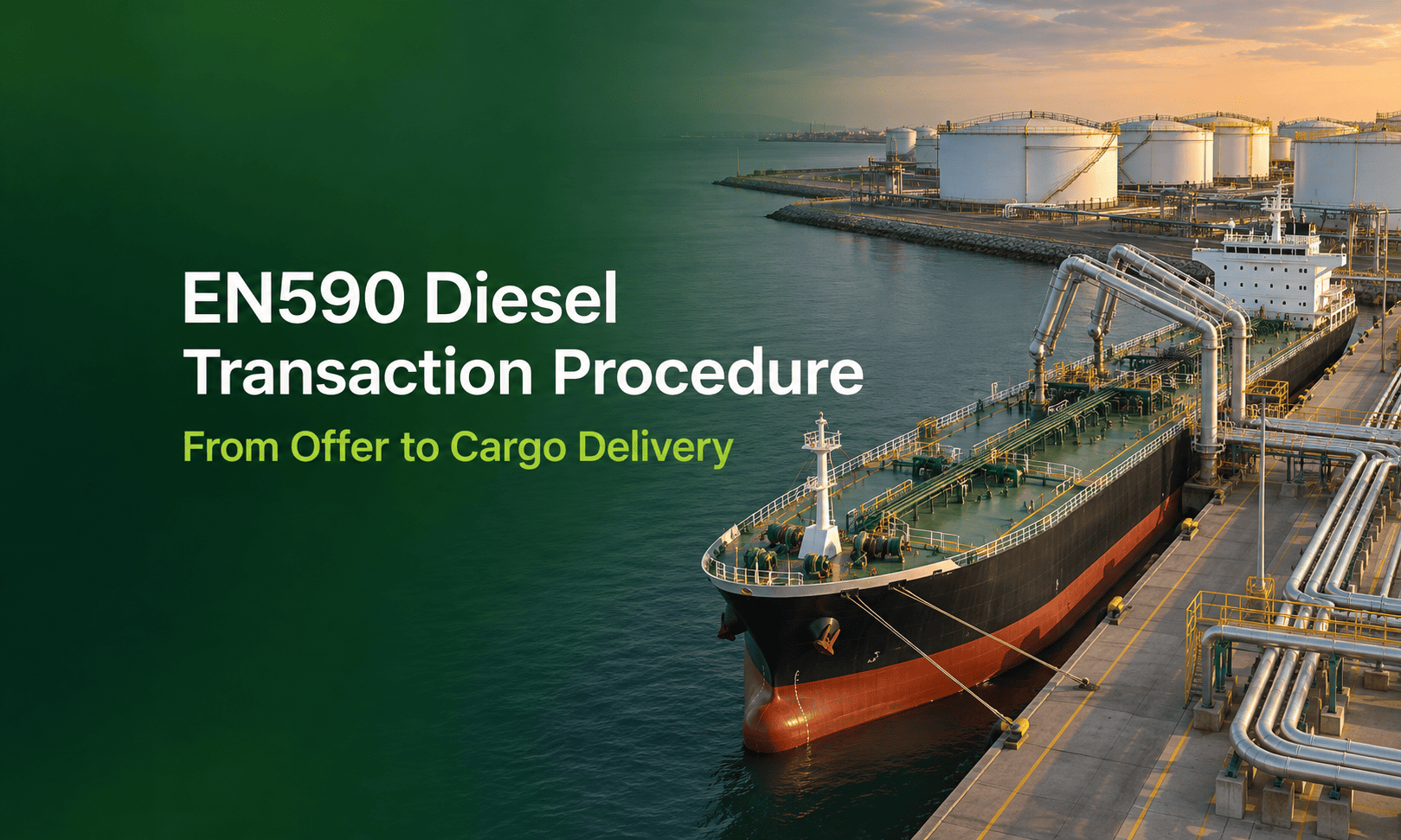
Keep the storage booking aligned with the fuel deal. If your diesel purchase depends on terminal acceptance, make sure the relevant deadlines appear in the purchase agreement and transaction schedule. Review the EN590 diesel transaction procedure
Request diesel tank storage through GPA
If you need capacity, send your company name, preferred port, product grade, quantity, arrival window, storage duration and intended intake and release methods. Include the vessel or barge details if you have them.
If you already have a terminal offer, tell GPA which term you need to clarify, such as capacity, charges, scheduling or release conditions. A short summary is enough for the first enquiry.
Request Tank Storage · Email GPA About a Terminal Offer









No Comments