EN590 Diesel Sale and Purchase Agreement: 10 Checks Before You Sign
Received a seller’s offer for a bulk EN590 diesel cargo? Ask for the proposed transaction procedure and draft EN590 purchase agreement before you commit to a vessel, reserve tank storage or authorise payment. Read them together so you know who acts at each stage, what evidence they provide and which event moves the deal forward.
This guide is for international buyers negotiating spot cargoes, trial liftings or monthly supply. Start with the transaction sequence, then use the 10 checks to review the seller’s sale and purchase agreement (SPA).
Already have an offer? Send GPA your cargo volume, proposed port and the step you need to clarify. Discuss Your EN590 Transaction Procedure
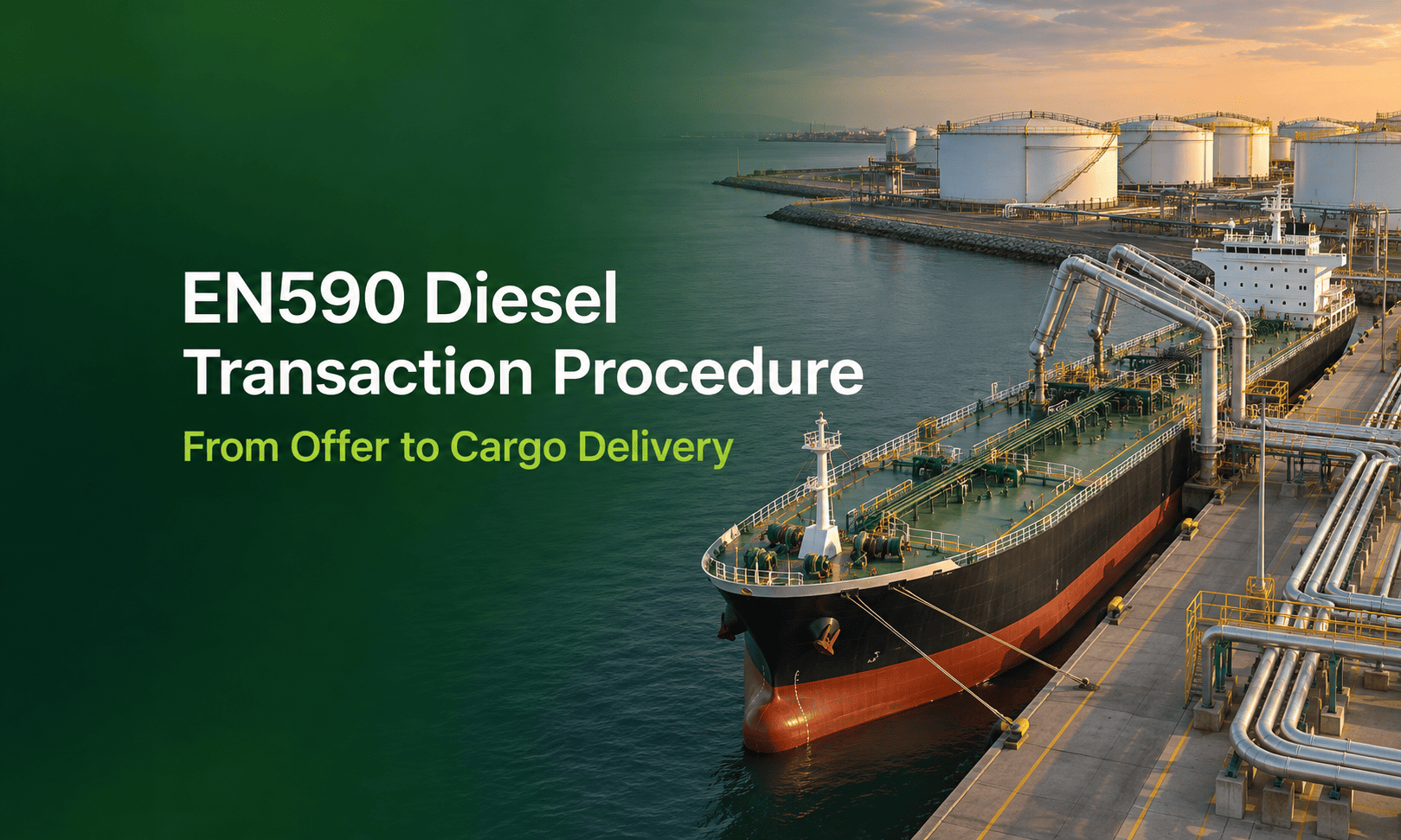
EN590 transaction procedure — from seller offer to cargo delivery
Ask the seller to show the proposed sequence in writing. The exact order depends on the agreed delivery basis, inspection arrangements and payment method.
| Stage |
What to confirm before moving forward |
| 1. Match the offer to your requirement |
Check the product grade, quantity, delivery basis, port and dates. For a monthly programme, ask which volume can be committed for the first lifting and when later liftings can be confirmed. |
| 2. Establish who is selling the cargo |
Confirm the contracting entity, authorised signatory and who can instruct the release or loading of the product. If a representative introduced the deal, establish their role and who will perform the seller’s obligations. |
| 3. Align the procedure with the draft SPA |
Compare the seller’s procedure, commercial offer and draft contract. Resolve differences in inspection timing, fees, document release and payment triggers before signing. |
| 4. Coordinate the vessel and terminal |
Identify who nominates the vessel, who confirms terminal acceptance and what deadlines apply. If capacity must be reserved, agree who bears the cost if the cargo, vessel or dates change. |
| 5. Inspect and document the cargo |
Agree who appoints the inspector, where sampling and measurement take place and which reports are required. Match the reports and shipping documents to the contracted cargo. |
| 6. Complete payment and delivery |
Follow the payment milestones agreed in the SPA. Reconcile the invoiced quantity with the agreed measurement and retain the documents needed for any claim. |
If you’ve already sent an ICPO, compare the draft SPA with the quantity, port, delivery basis and timing in your order. If you’re still preparing the purchase request, see GPA’s guide to preparing an EN590 ICPO.
EN590 purchase agreement checklist — 10 terms to review
| Contract term |
What to check before you sign |
| 1. Contracting seller and authority |
Identify the legal entity selling the diesel, its authorised signatory and the invoicing entity. Clarify any difference between the seller, its representative and the party named to receive payment. |
| 2. Diesel grade and specification |
Attach the full agreed product specification, including any destination or seasonal requirements. A reference to “10 ppm” gives the sulphur figure. The product schedule should also state the other agreed quality limits and test methods. |
| 3. Quantity and tolerance |
State the volume, unit, permitted tolerance and who can exercise it. Agree which measurement determines the invoiced quantity. For recurring supply, separate firm liftings from later nominations. |
| 4. Price and pricing period |
Confirm the currency, price unit and included charges. If the price follows a benchmark, name the exact assessment, differential and pricing dates so both parties can reproduce the calculation. |
| 5. Delivery and nomination |
Specify the Incoterms® rule and version, named port and agreed terminal or berth where applicable. Set the lifting window, nomination deadline and process for confirming or changing dates. |
| 6. Inspection and acceptance |
Agree who appoints and pays the inspector, where samples are taken, which results control and what happens if quality or quantity is disputed. |
| 7. Payment and documents |
Define the payment method, triggering event and deadline. List the documents required, who issues them and when they must be presented. Set out any deposit or separate fee and the conditions that apply. |
| 8. Ownership and risk |
Specify when title to the cargo passes and confirm the point at which risk transfers. Check how both provisions fit with the inspection, payment and delivery sequence. |
| 9. Delays, short delivery and off-spec fuel |
Agree who bears waiting costs, how quickly a claim must be notified and what remedies apply. Compare the SPA with any separate charterparty or tank storage agreement. |
| 10. Governing law and disputes |
Identify the governing law, dispute process and notice requirements. State which terms take precedence if the SPA, product schedule or incorporated conditions conflict. |
FOB and CIF terms in an EN590 diesel SPA
FOB. Under FOB Incoterms® 2020, the seller delivers the cargo on board the buyer-nominated vessel at the named port of shipment. Risk passes when the cargo is on board. Before fixing the vessel, confirm cargo readiness, berth acceptance and the nomination deadline. Check how the SPA and charterparty allocate waiting costs. library.iccwbo.org
CIF. Under CIF Incoterms® 2020, the seller arranges freight and insurance to the named destination port, while risk generally passes when the cargo goes on board at the shipment port. Confirm the shipment window, insurance documents and receiving arrangements. Record the agreed ownership and payment milestones separately in the SPA. library.iccwbo.org
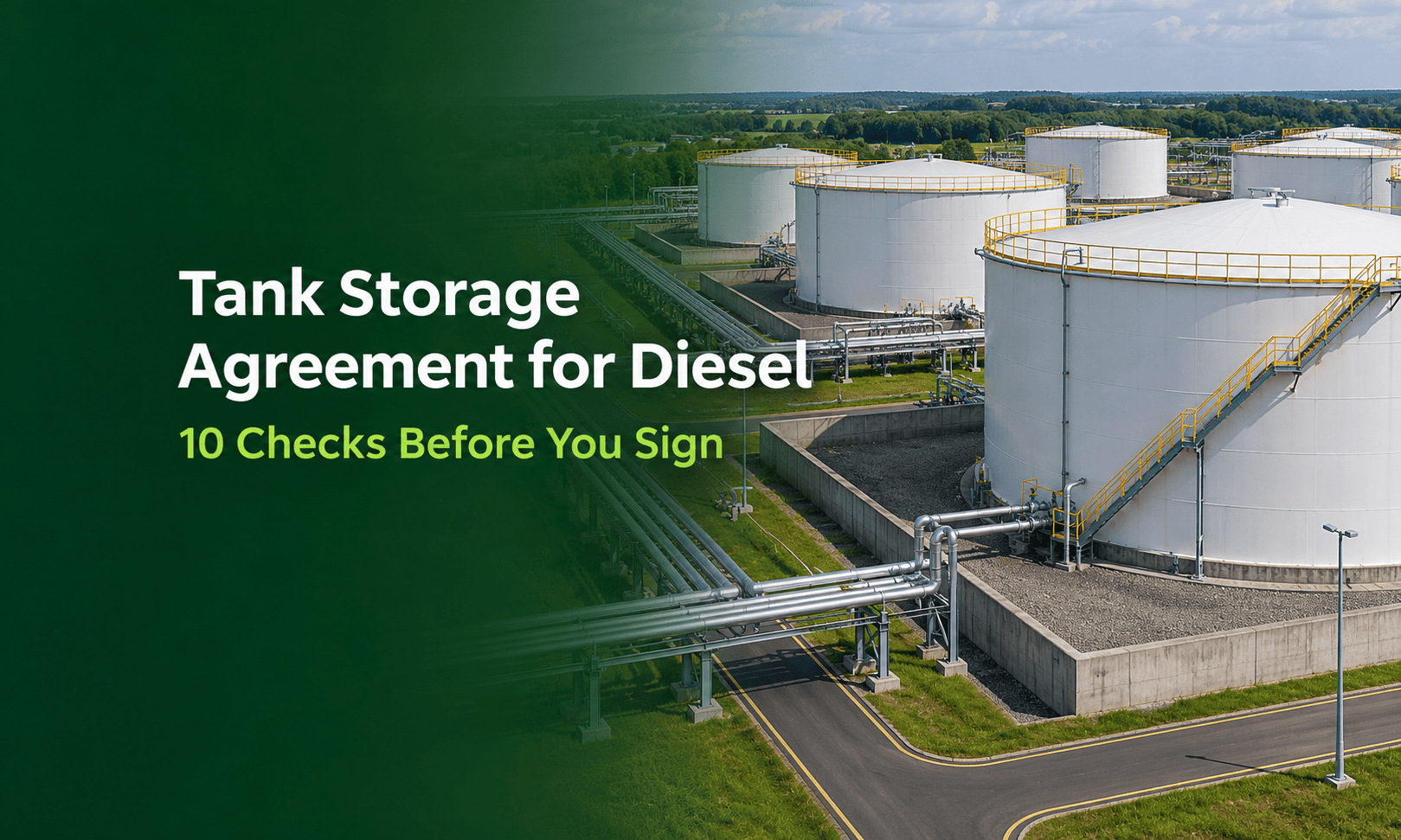
If your transaction requires tank storage, GPA works with verified providers and can nominate a suitable terminal. The operator confirms capacity, product acceptance and dates. Request a Tank Storage Nomination
Worked example — what does “payment after inspection” mean?
A buyer receives an offer for 50,000 MT of EN590 diesel FOB. The seller’s procedure says “payment after inspection.” The seller expects payment after a shore-tank quality report. The buyer expects to pay after loading, once the final quantity certificate and shipping documents are available. That difference changes when the buyer needs funds and what evidence they’ll have when payment falls due.
Before signing, get written agreement on four questions:
- Where and when does inspection happen? Identify whether the deal requires shore-tank sampling, inspection during loading or both.
- Which event triggers payment? Specify the agreed milestone and the documents the seller must provide.
- When is payment due? State how much time the buyer has after the agreed event and receipt of the required documents.
- What happens if there’s a discrepancy? Agree how to handle missing documents, an off-spec test result or a loaded quantity outside tolerance.
Use the same trigger in the SPA and transaction procedure. If the parties are using a documentary credit, compare the proposed credit with the contract and confirm that the named issuers can supply the required documents on time.
Discuss your EN590 offer or request a bulk supply quote
Have an offer or draft SPA? Send GPA your company name, cargo volume, named port, proposed dates and the step or clause you need to clarify. A short summary of the procedure is enough for the initial enquiry.
Still sourcing EN590 diesel? Send your required grade, volume, preferred FOB or CIF terms, port and loading or delivery window. For monthly supply, include the trial quantity, monthly volume and contract duration.
Discuss an Existing EN590 Offer · Request a Bulk EN590 Quote







No Comments